
Laser Eye Surgery in Kyle, TX
Experience the freedom of clear vision with advanced laser eye surgery at Spark Eye Care. Our board-certified surgeons use state-of-the-art technology to correct nearsightedness, farsightedness, and astigmatism, helping you reduce or eliminate your dependence on glasses and contact lenses.
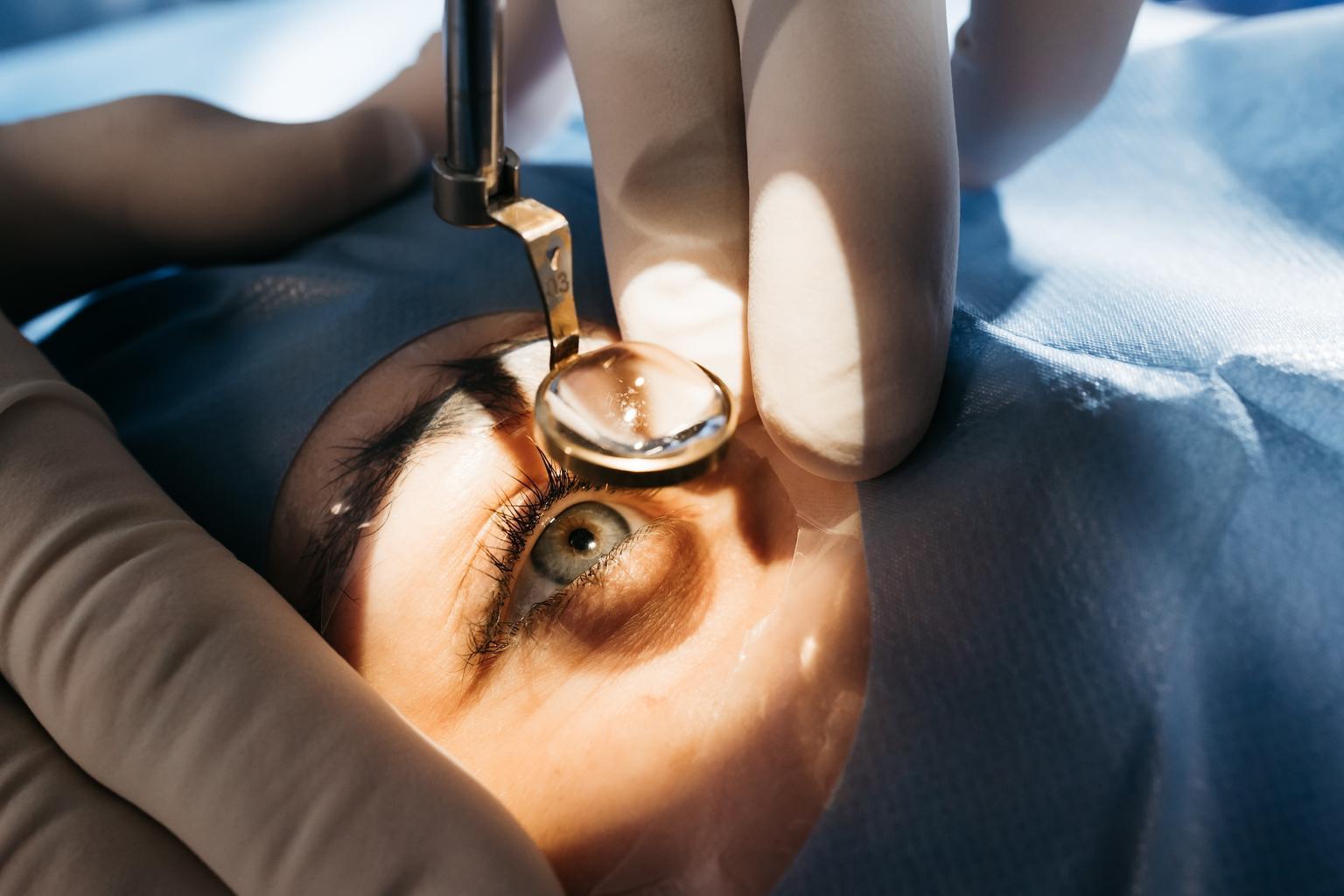
What is Laser Eye Surgery?
Laser eye surgery, also known as refractive surgery, is a precise medical procedure that uses advanced laser technology to reshape the cornea and correct vision problems. The cornea is the clear front surface of your eye that helps focus light onto the retina. When the cornea has an irregular shape, it causes refractive errors such as myopia (nearsightedness), hyperopia (farsightedness), or astigmatism. Laser eye surgery corrects these imperfections by removing microscopic amounts of corneal tissue in a carefully calculated pattern, allowing light to focus properly on the retina for clearer vision.
The most common types of laser eye surgery include LASIK (Laser-Assisted In Situ Keratomileusis), PRK (Photorefractive Keratectomy), and SMILE (Small Incision Lenticule Extraction). LASIK involves creating a thin flap in the cornea, reshaping the underlying tissue with an excimer laser, and repositioning the flap. PRK removes the outer layer of the cornea before laser reshaping, making it ideal for patients with thinner corneas. SMILE is a newer, minimally invasive technique that removes a small piece of corneal tissue through a tiny incision. Each procedure has specific advantages, and your surgeon will recommend the best option based on your eye anatomy, prescription, lifestyle, and personal goals.
Laser eye surgery has been performed for over three decades with continuous technological improvements enhancing safety and outcomes. Clinical studies demonstrate that more than 96% of patients achieve 20/40 vision or better after LASIK, with most reaching 20/20 or better. The procedure is FDA-approved for adults over 18 with stable prescriptions, healthy eyes, and adequate corneal thickness. Ideal candidates are those seeking freedom from glasses and contacts for work, sports, travel, or daily convenience. At Spark Eye Care, we use the latest wavefront-guided and topography-guided laser systems to create customized treatment plans that address your unique visual needs and deliver exceptional results.
You May Be a Candidate for Laser Eye Surgery If You Experience:
- Nearsightedness (difficulty seeing distant objects clearly)
- Farsightedness (difficulty focusing on near objects)
- Astigmatism (blurred vision at all distances due to irregular corneal shape)
- Dependence on glasses or contact lenses that interferes with your lifestyle or work
- Contact lens intolerance or discomfort
- Desire for visual freedom during sports, swimming, or outdoor activities
- Stable vision prescription for at least one year
Our Approach to Laser Eye Surgery
Comprehensive Evaluation
Your journey begins with an extensive eye examination including corneal topography, wavefront analysis, pupil measurement, and tear film assessment. We measure corneal thickness, map irregularities, and evaluate overall eye health to determine your candidacy and design a customized treatment plan tailored to your unique visual anatomy.
Advanced Laser Technology
We utilize cutting-edge femtosecond and excimer laser systems with wavefront-guided and topography-guided capabilities. The procedure typically takes 10-15 minutes per eye. Numbing drops ensure comfort while our precision lasers reshape your cornea with sub-micron accuracy, guided by your unique eye map for optimal visual outcomes.
Post-Operative Care
Follow-up visits at 1 day, 1 week, 1 month, 3 months, and 6 months ensure proper healing and optimal results. We provide prescription eye drops, protective shields, and detailed recovery instructions. Our team is available 24/7 for any questions or concerns during your healing process as your vision stabilizes and improves.
Treatment Options We Offer
LASIK (Laser-Assisted In Situ Keratomileusis)
The most popular laser vision correction procedure, LASIK creates a thin corneal flap, reshapes the underlying tissue with an excimer laser, and repositions the flap. Offers rapid visual recovery with most patients seeing clearly within 24 hours. Ideal for moderate to high prescriptions with minimal discomfort and fast return to normal activities.
PRK (Photorefractive Keratectomy)
A surface ablation technique that removes the corneal epithelium before laser reshaping, allowing it to regenerate naturally. Excellent option for patients with thin corneas, dry eyes, or those in high-impact professions. Recovery takes slightly longer but achieves equivalent visual outcomes to LASIK with enhanced corneal stability.
Custom Wavefront and Topography-Guided Treatments
Advanced technologies that create a detailed map of optical imperfections unique to your eye, enabling personalized laser treatment beyond standard prescriptions. These custom approaches reduce higher-order aberrations, improve night vision, enhance contrast sensitivity, and deliver superior visual quality, especially in challenging lighting conditions.
Enhancement Procedures
In rare cases where additional correction is desired, we offer safe and effective enhancement procedures to fine-tune your vision. These follow-up treatments use the same proven laser technology to address residual refractive errors or age-related vision changes that may occur years after your initial surgery.
What to Expect During Your Laser Eye Surgery Journey
Initial Consultation
Comprehensive eye examination with advanced diagnostic testing including corneal topography, wavefront analysis, and ocular health assessment. We'll discuss your candidacy, review procedure options, answer all questions, and provide detailed pre-operative instructions. Plan for 90-120 minutes for this thorough evaluation.
Surgery Day
The procedure itself takes only 10-15 minutes per eye. You'll receive numbing drops for comfort. Most patients experience mild pressure but no pain. Vision may be blurry immediately after, but many notice improvement within hours. You'll need someone to drive you home. Rest is recommended for the remainder of the day with protective shields worn while sleeping.
First Week of Recovery
Most LASIK patients see dramatic improvement within 24-48 hours and can return to work within 1-3 days. PRK patients experience gradual improvement over 3-7 days. You'll use prescribed antibiotic and anti-inflammatory drops. Mild dryness, light sensitivity, and fluctuating vision are normal. Avoid rubbing eyes, swimming, and heavy exercise during this initial healing phase.
Months 1-3: Stabilization Period
Your vision continues to stabilize and sharpen. Most patients achieve their final visual outcome by 3 months. Regular follow-up appointments monitor healing progress. Artificial tears help manage any residual dryness. You can gradually resume all normal activities including sports, swimming, and eye makeup as cleared by your surgeon.
Long-Term Outlook
The vast majority of patients achieve 20/20 vision or better and maintain excellent results for years or decades. While laser surgery permanently reshapes the cornea, age-related vision changes like presbyopia (need for reading glasses after 40) can still occur naturally. Annual comprehensive eye exams ensure continued eye health and monitor for any other conditions unrelated to your surgery.
Common Questions About Laser Eye Surgery
Is laser eye surgery safe, and what are the risks?
Am I a good candidate for laser eye surgery?
Does laser eye surgery hurt, and what is recovery like?
How long do laser eye surgery results last?
What is the difference between LASIK, PRK, and other laser procedures?
Related Services
Cataract Surgery
Advanced cataract removal with premium lens implants to restore clear vision and reduce dependence on glasses.
Dry Eye Treatment
Comprehensive evaluation and treatment for chronic dry eye syndrome with advanced therapies for lasting relief.
Comprehensive Eye Exams
Thorough eye health evaluations with advanced diagnostic technology to detect and prevent vision problems.
Ready to Experience the Freedom of Clear Vision?
Schedule your comprehensive laser eye surgery consultation at Spark Eye Care today and discover if you're a candidate for life-changing vision correction.
Schedule Your Consultation